The third in a series of posts about Six Feet Under
Previously:
I would be surprised if ‘Grinding the Corn’ (S4E9) was anyone’s favourite Six Feet Under episode. Claire’s adventures in homosexuality take a sharp turn into calamity here, in a way that feels driven more by the show’s weirdness about bisexuality than anything else. That plot resolves with a boy-powered first orgasm that seems unworthy of the show, but don’t worry – there’s also a plot where David worries that Keith will go straight after finding out that he fucked Celeste. Elsewhere, Ruth takes a trip to Mexico that feels like an under-cooked version of a plot from New Girl; and back at the funeral home, the other menfolk deal with the revenge of the nerds.
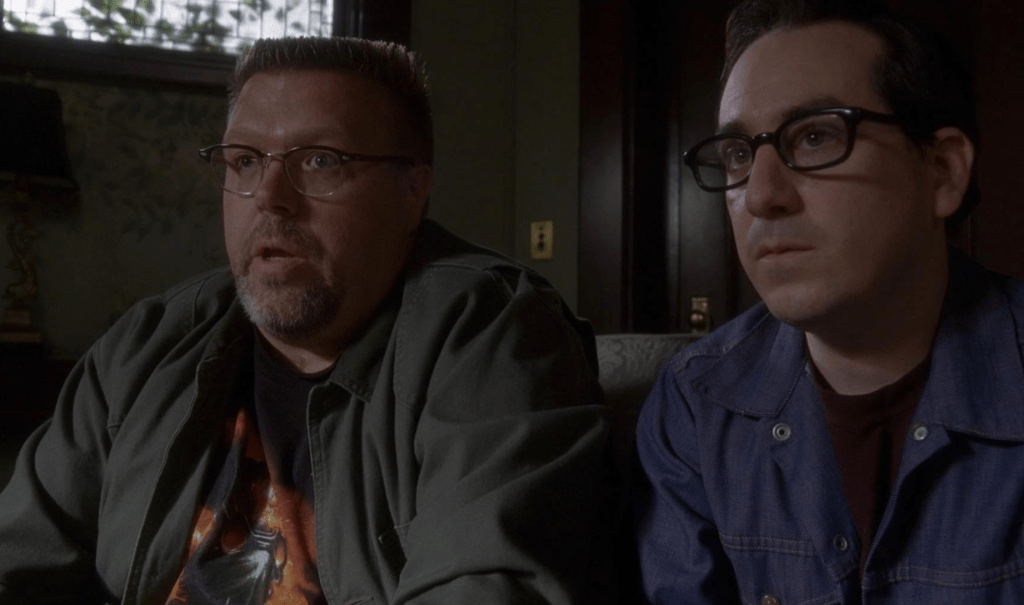
The death of the week in this episode involves a comics collector who is crushed to death by his own collection (!!!), and the attempts by his terrible nerd friends to steal the rare comic he asked to be buried with. As someone who makes, reads, and writes about comics, this plot is deeply nostalgic to me. The figure of Comic Book Guy wasn’t just a fixture of my childhood from The Simpsons or from trips to the weird comics shop that briefly popped up in East Kilbride. He existed in comics, too, in the adolescent self-loathing that characterised “adult” comics through the mid-2000s. Daniel Clowes’ survey of the comics scene in Pussey! is an obvious example, as is the moment in Ghost World where his anagram wearing stand-in, Enid Coleslaw, runs away from “perv” cartoonist “David Clowes.”
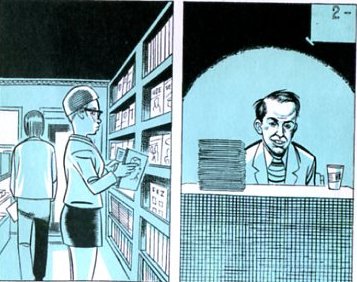
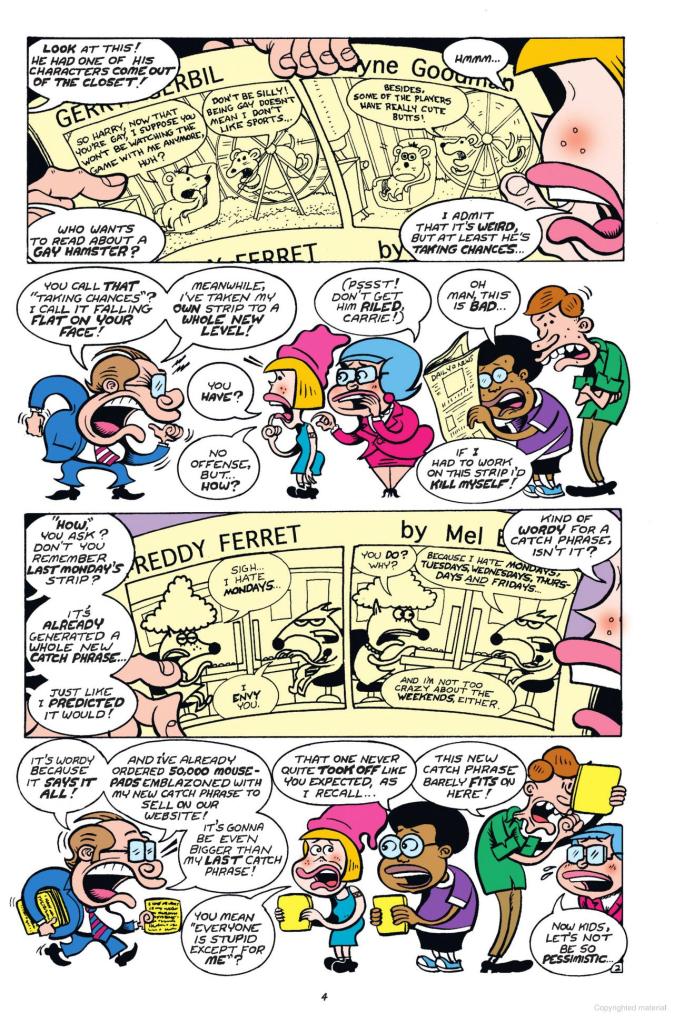
Elsewhere, figures from superhero comics haunt Jimmy Corrigan in Chris Wares’ book of the same name, and comic book fans and creators are the subjects of mockery by cartoonists like Evan Dorkin (The Eltingville Club) and Peter Bagge (Sweatshop). Obsessed with the overflowing rubbish bin of 20th-century culture and worried about the recuperation of childhood affection into irony, pedantry, and salesmanship, this strain of alternative cartoonist needed someone to project their own anxieties onto. They found the mirror waiting.
Superhero comics internalised these anxieties, too. Being the source of much of the worry, they largely did so on the level of form. Sometimes, this meant mocking the genre from within (Hitman). At other points, it meant adopting techniques of alienation that could be crude (Deadpool), sophisticated (Watchmen), or some unfathomable combination of the two (The Dark Knight Returns).
‘Grinding the Corn’ has none of that self-disgust or self-justification to it. Six Feet Under just thinks adult comic book fans are funny until it wants to make a point about them being a community. In a show that’s so often about the ties of obligation – be they biological, financial, or romantic – it makes sense to dramatise the conflict between the value of the rare comic and the value of being one of the boys. The trouble is that nothing that happens with the nerds is particularly interesting.
Their antics are dull comedy, a caper plot that would have been given to the nerds villains from Buffy the Vampire Slayer season 6 but without the genuinely rancid undertones. Worse, this mode seems to carry over into the scenes featuring the regular characters. Ruth’s plot feels like a zany adventure, Claire’s like a lesser raunch comedy from the era. When George, Nate and Rico foil the coffin-robbers in a low-energy parody of cape book storytelling, it’s as though the uncanny energy of the show’s dream sequences is now running through the its lucid moments.
The vision of Nate Senior as Death Man was one thing, but did we need a real life frying pan action scene?
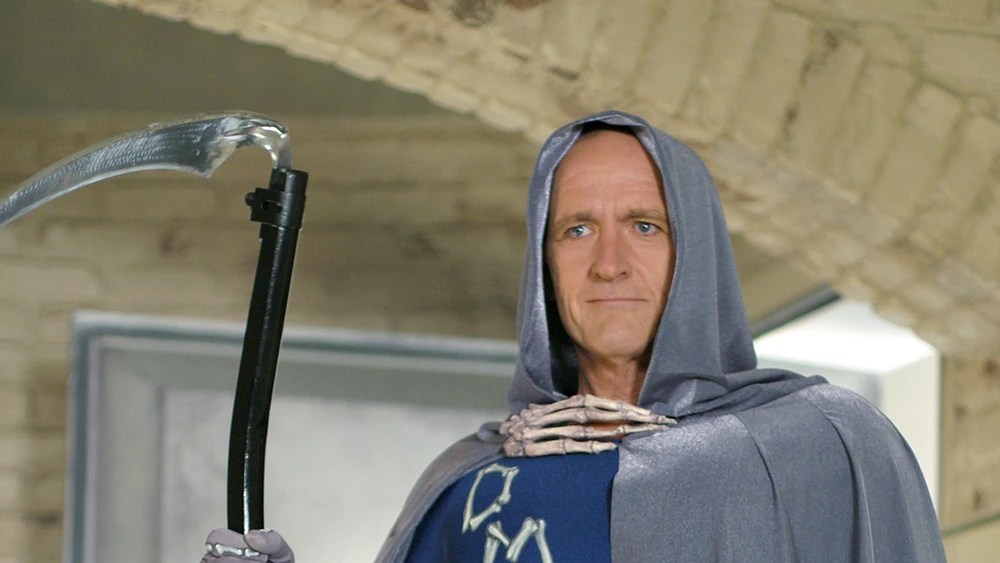
It’s okay if the breaks in the reality of the show feel corny or on-the-nose. The ones in this episode come close to taking a shit in your nostrils, but generally speaking, it’s this poorly socialised aspect that gives these interludes their charge. In a story where people constantly speak their brains and scream their hearts out, it suggests levels of honesty too painful to be spoken in company. Tonedeaf episodes like this one, meanwhile, disrupt the music of the show in ways that threaten the overall composition.
So why do I still feel glad to have encountered this plot? Well, partly because it reminded me of the anxious comics of my youth, and partly because it reminds me of a time when these were marginal concerns for most people. Times before the companies that owned the paper mines worked out how to turn them into jet fuel, if you will.
The comic book guy survived the mid-2000s and became the main character, someone capable of having a love interest who wasn’t Skinner’s maw. Big Bang Theory ran from 2007-2019, the peak of the superhero movie boom, and while the nerdiness of the crew was still the joke, their position had shifted. Their home was now your home, as sure as the loft from Friends or Al Bundy’s couch had been. Perhaps there was a similar amount of comics-adjacent detritus in both spaces by the end of that run, and perhaps your prick uncle was now able to discuss Batman “lore” with you over Christmas dinner.
It’s hard to grudge anyone the pleasure of talking Batman with a mouthful of stuffing, I know. But if it slowed the Funkopop apocalypse, I’d take a hundred crude nerd caricatures and a thousand insecure comics on top of that. Anything to unpick the marketing of endless tat to a huge audience that I’m still very much a part of. What can I say? The anxious energy of niche culture seems more potent to me than the “franchise as international sports team” model of the day.
***
I started writing this post just after watching ‘Grinding the Corn’, and finished it after watching the show’s last ever episode. My opinion on the relative strength of ‘Grinding the Corn’ hasn’t changed in that time. I still think it’s an example of the worst of Six Feet Under’s sitcom years, but that doesn’t seem so disappointing now.
In those middle seasons, you can feel the showrunners scrabbling for new material to keep it all going. Some of what they come up with works. Claire’s early art school adventures capture something of the adolescent search for meaning; Arthur and George make a great one-two of suitors for Ruth, with the uncanny tension of the former giving way to the elder fuckboy energy of the latter. When you compare these seasons to the ones on either side, however, it becomes clear that Six Feet Under works best when it has its own finite nature in mind.
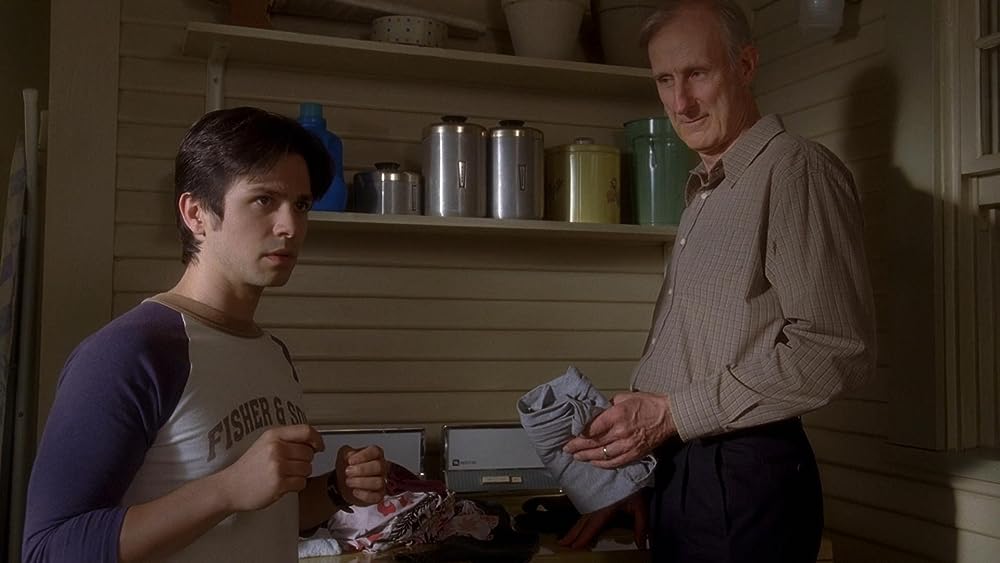
None of the plotlines in ‘Grinding the Corn’ are well-handled, but most of them inform the better material in season five. Claire’s inability to see past her own self-validation is developed with great care in those final episodes. So is Ruth’s need to break the cycle of care and frustration that’s defined her whole life. As for the bonding between George, Nate, and Rico, it’s not a thread that leads anywhere, but it’s indicative of the sort of scene that defines the show’s later period. In that last rush of episodes, the viewer is frequently rewarded by moments where characters find common ground where you’d least expect it.
Knowing this, I can look back on the episode more fondly than I might have otherwise. Just so long as I don’t think about David hallucinating tits everywhere. Like the comic book men, that stuff is simply gormless.
 Blue Box // Recorder
2 responses to “Comic Book Men”
[…] post on Six Feet Under’s comic book men had me thinking about this trickster-interview of Kevin Smith from the archives of The Best Show. […]
LikeLike
[…] Comic Book Men […]
LikeLike