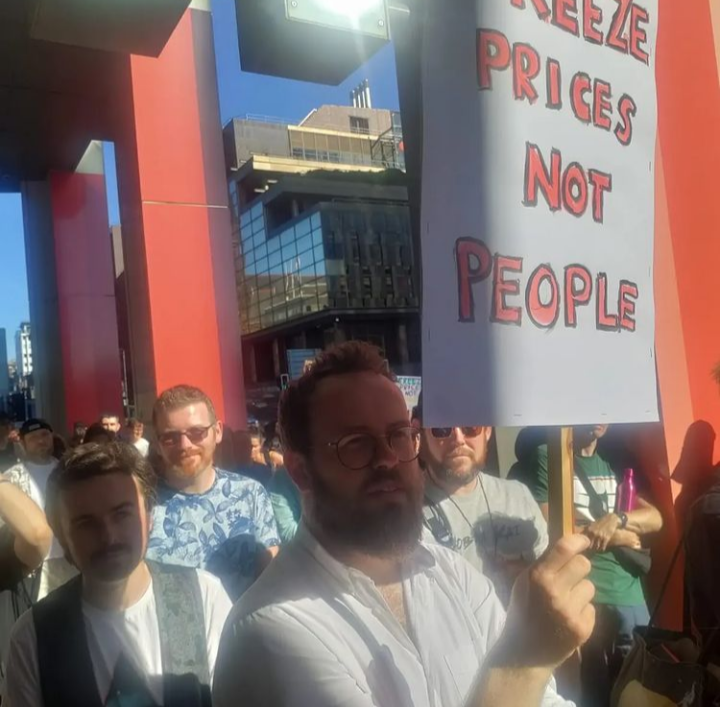
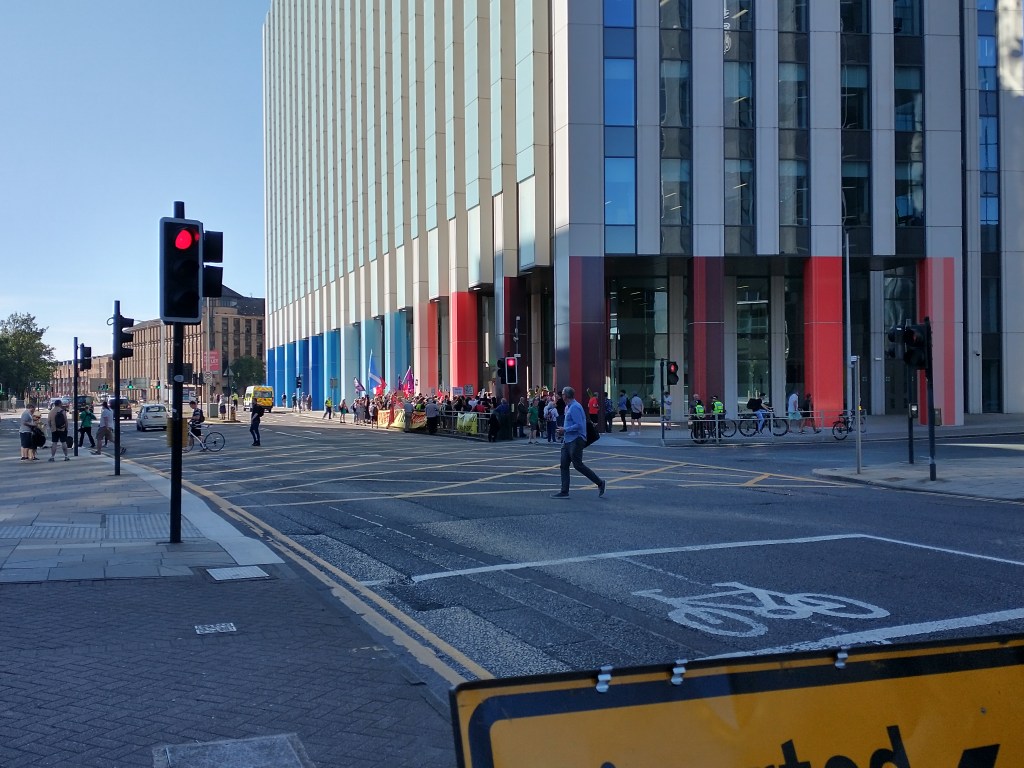
Last Friday I went down to the Power to the People demonstration outside the Scottish Power building in Glasgow. Turnout was decent, with trade unionists, political activists and radge punters all withstanding the hair-melting heat to show a bit of opposition to the impossible conditions we are being told are inevitable.
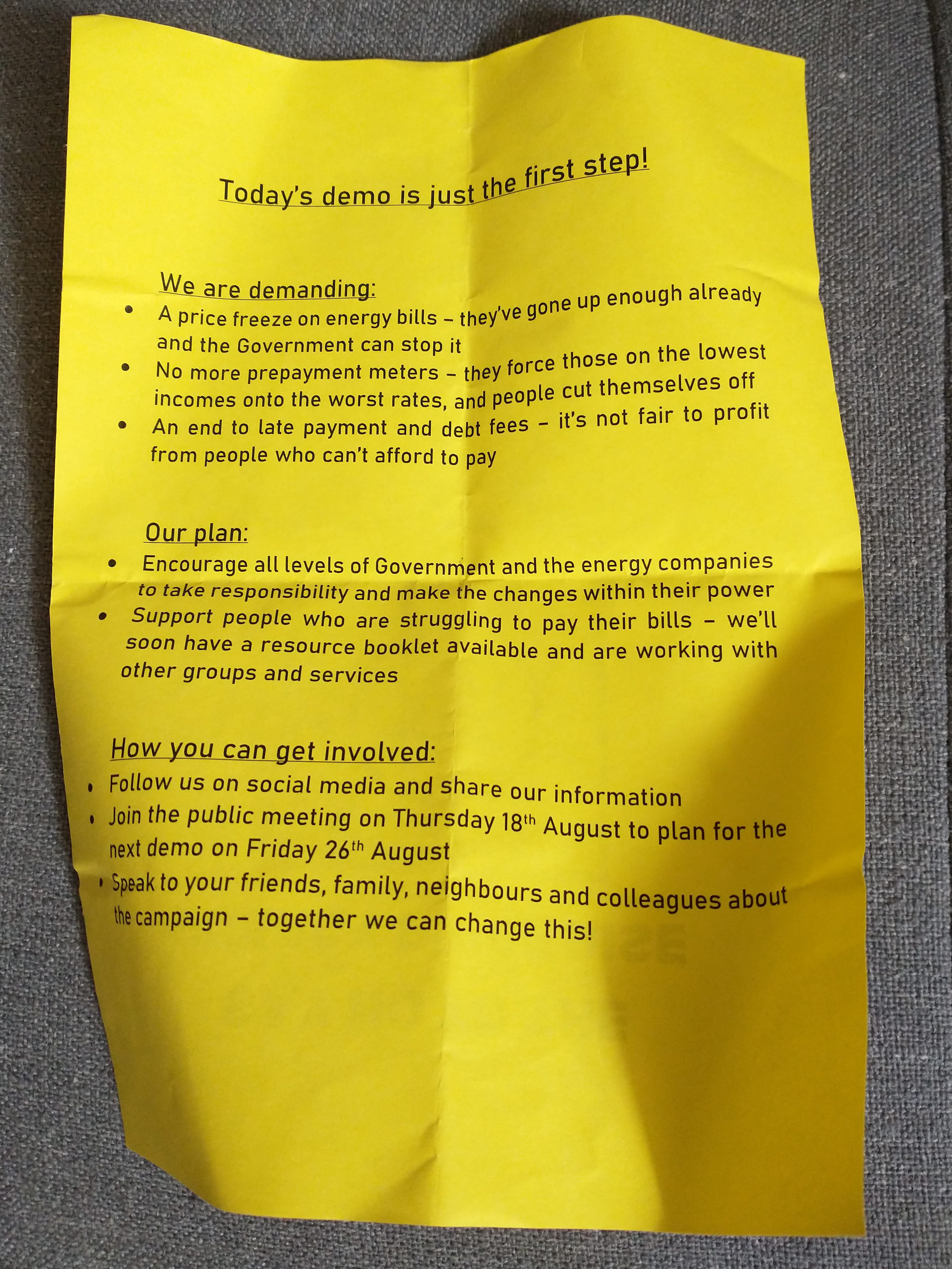
Fair play to the organisers for making sure everyone there had the chance to learn about upcoming actions too. I might not have made it to the public meeting on Tuesday night but at least I knew that I was missing out.
After the demo I got to thinking about Alistair Davidson’s essay on how the unstated assumptions about climate change that have informed our social response are a demonstrable nonsense now. The climate crisis and what we now refer to as the cost of living crisis both take us into this space, where the need for change is at once inarguable and somehow impossible. Despair is a reasonable response to this situation, which is why I appreciated Alistair’s approach:
“We must begin by addressing our emotions. In place of panic, denial, or avoidance, we need calm, acceptance, and a deep seriousness. This will allow us to turn our attention to what is happening. We must breathe, and allow our fear to pass: only then can we move ourselves to action.”
To which I would add that this feels much more plausible to me when the reckoning is undertaken collectively. As with all of our national conversations, the discussion around the end of covid restrictions has been asinine, focused on the sort of freedoms and difficulties that concern the owners of large business more than most – how much more we could now spend down the shops, how much better it would be if we were all working in the office again, and so on. Everything from the concerns of the immunocompromised to the needs of those who have nothing to gain from trying to fit into Victorian working patterns has been outwith the scope of discussion.
Without downplaying the needs of those who have good reason to stay away from the crowd, I’ll admit that I missed its sense of possibility during lockdown. A large gathering is capable of so much, for good and for ill. While I think coming to terms with where we are in relation to climate, in relation to energy, and capital, and how these things relate is probably work better done with a smaller group of fellow travellers, the capacity of that larger crowd to make the necessary possible seems magical to me right now.
From the media response to trade union leaders, you can tell other people, who have a different set of outcomes in mind, have a similar feeling about what may still be possible.


Leave a Reply