The Terminator (James Cameron, Linda Hamilton, Michael Biehn, Arnold Schwarzenegger, 1984)
You can still feel them, can’t you? Ice cold despite the violence involved in the machine’s passing. Check your shoulder. Nothing there, not so much as a single finger. So where is the chill coming from?
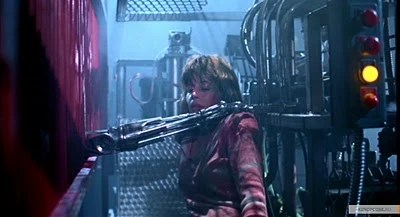
Sarah Connor squirms out of the machine’s grip here, but even if she can’t see the precise technological shifts – away from this movie’s bespoke model work, the cut to the ruins of Schwarzenegger’s face uncanny but still admirable as a fence built by an older relative, on to the infinite screensaver dioramas of Avatar – she knows it’s not an ending.
Did your manager pass by a minute ago? Were they talking to a salesman? Did one of them put their hand on your shoulder and talk about the future? How can that be when you work from home?
I talked about The Terminator with an authority figure last week. “I’ve always thought it was a sweet love story,” they said. That one bothered me for a while too. The way the movie runs on helpful kidnap energy – “Come with me if you want to live” – then ends with a scene where Connor decides whether or not to tell her unborn son it’s his duty to groom his father. “We loved a lifetime’s worth” a times/measures solution to bring about the inevitable. “In technical terminology… he’s a loon!”
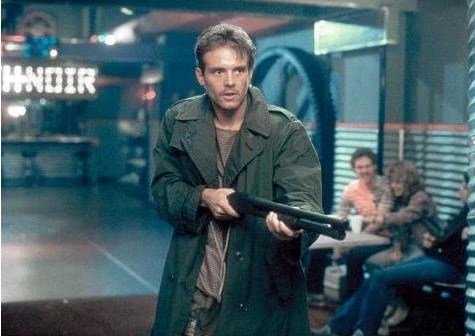
What this plot highlights is that the threat isn’t so much a specific technology that demands our annihilation as a set of social conditions that demand such technologies. Reality remade as something that cannot be bargained with, only accepted. “This is the way everything’s going, might as well get ahead.”
Your eyes are closed. You can feel the hand on your shoulder. What do you think you’ll see next time you find the strength to look?
 Blue Box // Recorder