Scotland loves a story with two faces. Jekyll and Hyde. Glasgow and Unthank. Luci and Luda. Heaven and hell. There are more than two stories to tell about Glasgow, of course, but allow me a little bit of theatre, I can feel the set rising up around me now!

This city dreams of itself as a Neuromantic Factory space, all freshly tailored razorblade smiles, home to the friendliest artists and blade runners in Europe if not the world. It wakes up each day into a Gray morning, the last bastion of the post-war consensus, as though any of us can agree on what that might mean. This version is, god help me, a place where socialism might seem possible in a certain slant of light.
Or is it more likely that the city wakes up every morning into a lurid cyberpunk dawn, having dreamt itself a social democratic paradise?
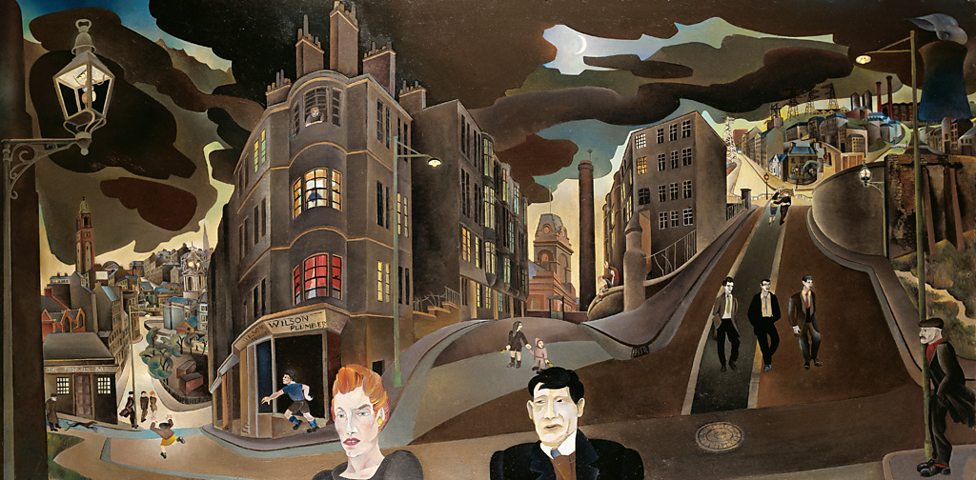
Sometimes I find it hard to remember if these positions are even contradictory. Is one stacked on the other, with a world of externalised hustle supporting the fantasy of collective contentment? YOU DECIDE!
Despite my use of his name as a shorthand for that more collectivist vision here, contemplating Alasdair Gray’s work usually helps me to work through some of the contours of this question. For all his interest in better nations, his writing was unfailingly honest about what it meant to “work as if you live” full stop.
Today, though, I’m a bit lost in the picture. All I know for sure is that when I look over my shoulder, down across the street, back into the morning, I can see the set fold and switch from one position to the next. It gives me a queasy feeling in the gut, or maybe that’s this cracked tooth/exposed nerve combo I’m currently rocking? Either way, a sense of dread mixed with possibility.
***
Our cat having recovered well from his operation, and with a crack team of cat sitters on hand to listen to his libretto on the subject of freedom, we spent last week in Copenhagen to celebrate my girlfriend’s birthday. I thought of those Gray mornings/nights a lot as we walked around the city, never quite hiring those cycles like we threatened to, clocking the unusually high numbers of books by Han Kang, Ursula K. Le Guin and Virginia Woolf that occupied the bookshop windows.
A quote from Anthony Bourdain came to mind:
“I do not, by temperament or inclination, gravitate towards Scandinavian countries. I am intimidated and made uncomfortable by safe, clean, orderly places where everything works and people seem creepily content.
“I’m a guy who tends to fall in love with hot, messy, barely functional places, where fiery arguments are common, and one is pleasantly surprised if one’s luggage arrives in good order, if at all.”
I’ve spent a lot of time going door-to-door for the version of Scotland that sounds a bit Scandinavian this past decade. After 2014’s referendum on Scottish Independence, I signed up for Harvie-Sturgeonism – a break from the undead empire, affordable homes, free public transport for all, and a wind turbine strapped onto the back of every able sailor. It still sounds like a decent start to me, but that moment has passed and Greer-Swinneyism doesn’t have the same sense of possibility. All the same, fair to say that I don’t share Bourdain’s aversion to orderly contentment.
And yet, just as the Gray dawn sinks into the night, and just as my own decade of earnest activism rotates out for something a bit more oblique and irrational, the scene is always keen to reveal itself as something else. Take a boat tour, drift through the “cultural harbour”, see the opera house and “The Building with the Blue Eyes“, pausing to note that the former was gifted to the waterfront by the latter, HQ for a global logistics company; you can play music on the stones, apparently. See the Wes Anderson-ass royal yacht, sat a little too bluntly beside a heritage frigate, and just across the water from storehouses built to hold the wages of colonialism and slavery. Think about Denmark’s place at the edge of anti-immigrant politics in Europe, and how that worldview might be applied.
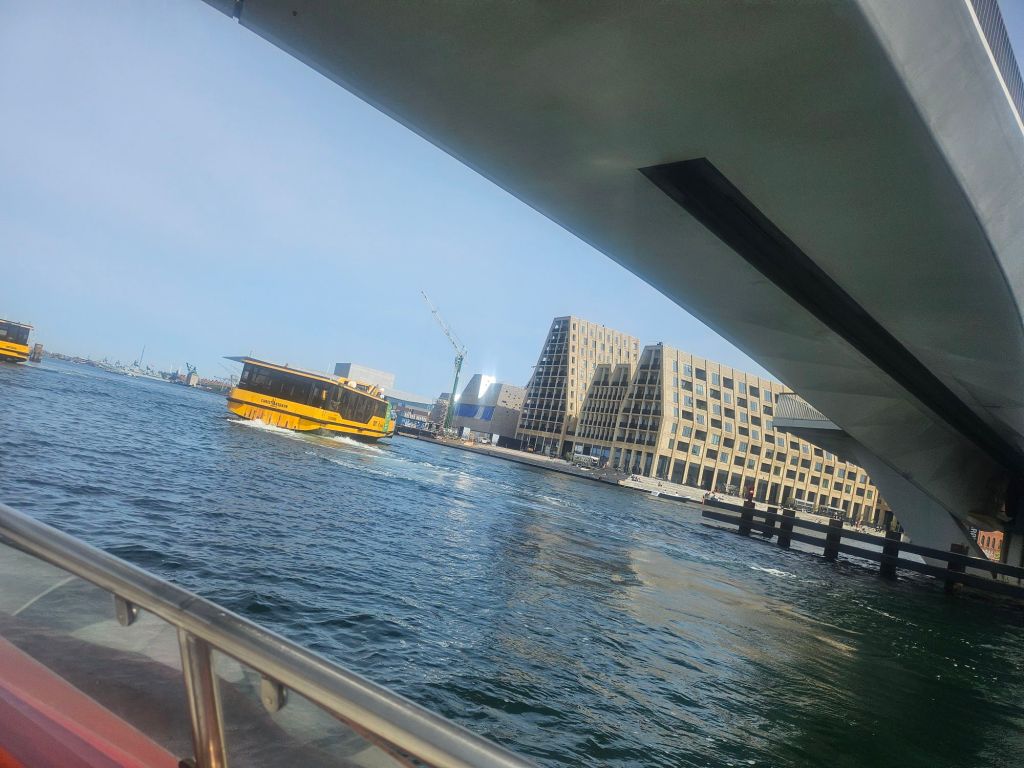
All too obvious. Always too obvious – like being back at home and going our for lunch in the Merchant City. The boat stopped at one point so the guide could point at a chocolate box beehive of housing on The Paper Island and note that 25% of these properties would be affordable public housing to ensure that “Copenhagen can never be a city only for the rich.” Of course, she went on to say, the affordable properties probably won’t be the ones with the view of the harbour…
***
Speaking of which, have you ever seen a photo of someone you used to know studding the walls like something out of a dystopian movie? We burst out laughing when we turned a corner a few months ago, having just parted ways with a friend only to see pictures of that friend’s ex staring out at us from all around.
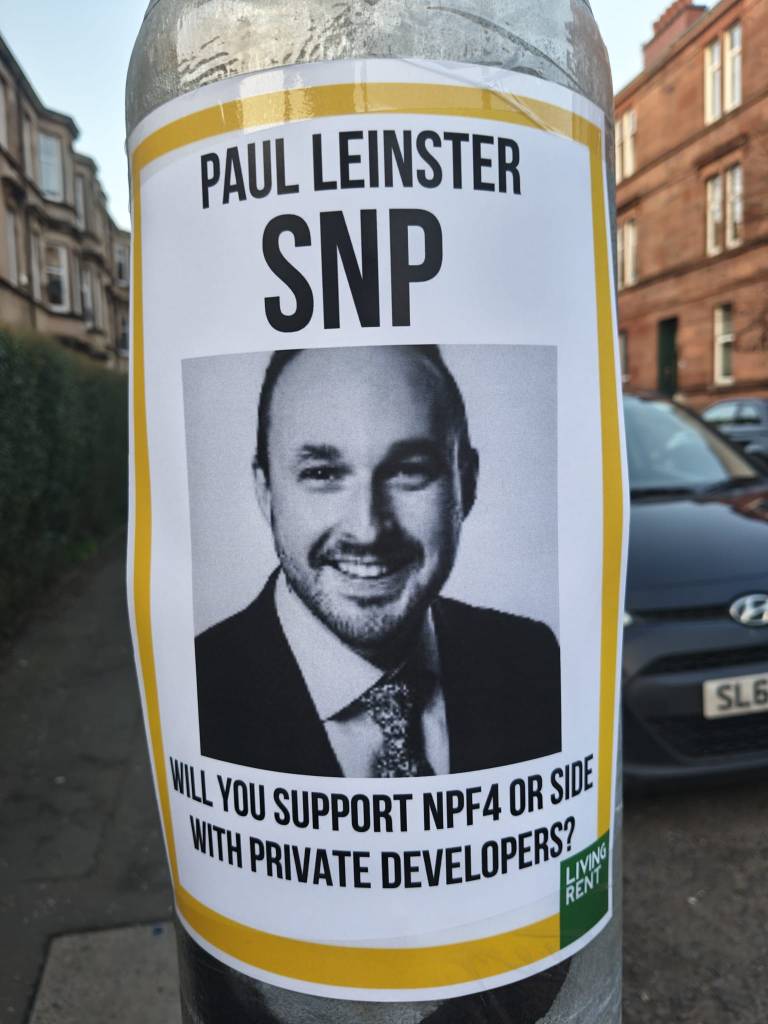
was weird but I didn’t know he was Darkseid.”
These posters were part of a Living Rent campaign to highlight Glasgow City Council’s interpretation of the requirement for 25% of its housing developments to include affordable homes. The council thinks this can be spread out across its development plan, where Living Rent reckon this should be a minimum requirement in every development.
Being able to look a politician in the face, perhaps even remembering an overcooked drama when that politician spilled wine on a couch – mebbe this was part of why some of us bothered to go door-to-door for another world in 2014? For a moment, it seemed possible to compress everything down to an old-school novel, rather than a postmodern myth.
It would never have been that easy, of course, and we knew that well enough even at the the height of the Scottish Independence referendum. “One does not simply walk away from Mordor when one is tangled up in the processes that define its existence” and all that. None of that seemed like a reason to stay in bed.
On the housing side, well, there are other wrinkles in the scenery – just ask the lass doing the boat tours in Copenhagen! There are questions of what types of properties are built where, of how different tenures are integrated, and of what social protections various combinations afford or deny. But on the numbers, it’s mebbe useful to consider that when I was born half of the homes in Scotland were social rents (secure tenure, comparatively okay rent costs, not for profit), whereas now the figure sits at around 23%.
One of these figures is more conducive for sustaining the Gray vision, while the other might tip the Neuromantic fantasy into contact with a more unforgiving version of the same story – hard to live a life of transformation and adventure if you’ve been priced out of existence.
***
On the birthday itself, we confined ourselves to Tivoli Gardens – a contained environment, built to shape certain needs it’s then perfectly equipped to satisfy. Despite playing a high-minded cunt on TV, I do love a theme park. Constant efforts to enforce uniformity in the real world: bad, fash. In a theme park: artificial in a way that obviates the work involved, and beside, you always know when you’re stepping off the ride, or walking out of the park. My main objection to Martin Scorcese’s comparison of Marvel movies to roller coaster rides is that I find the hit rate of the latter far more satisfying.
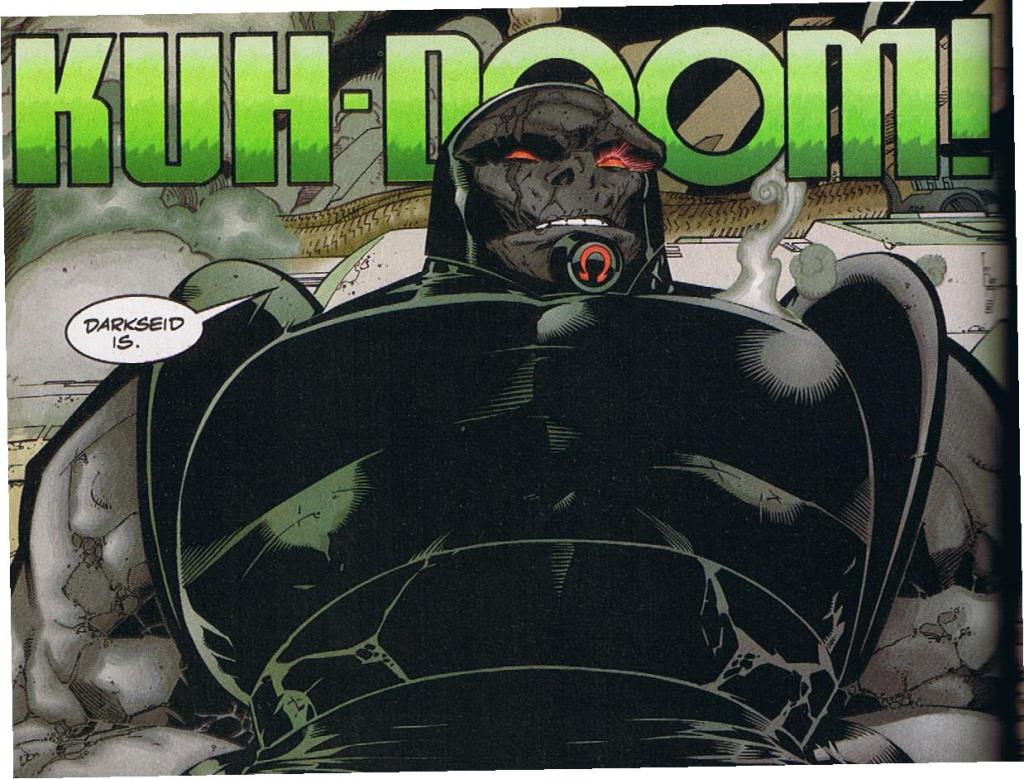
Still, Darkseid’s been on my mind since at least 2007, so when I wasn’t busy enjoying another whirl around the Rutschebanen, or drinking a spritz by the fountain, I was thinking about Happyland.
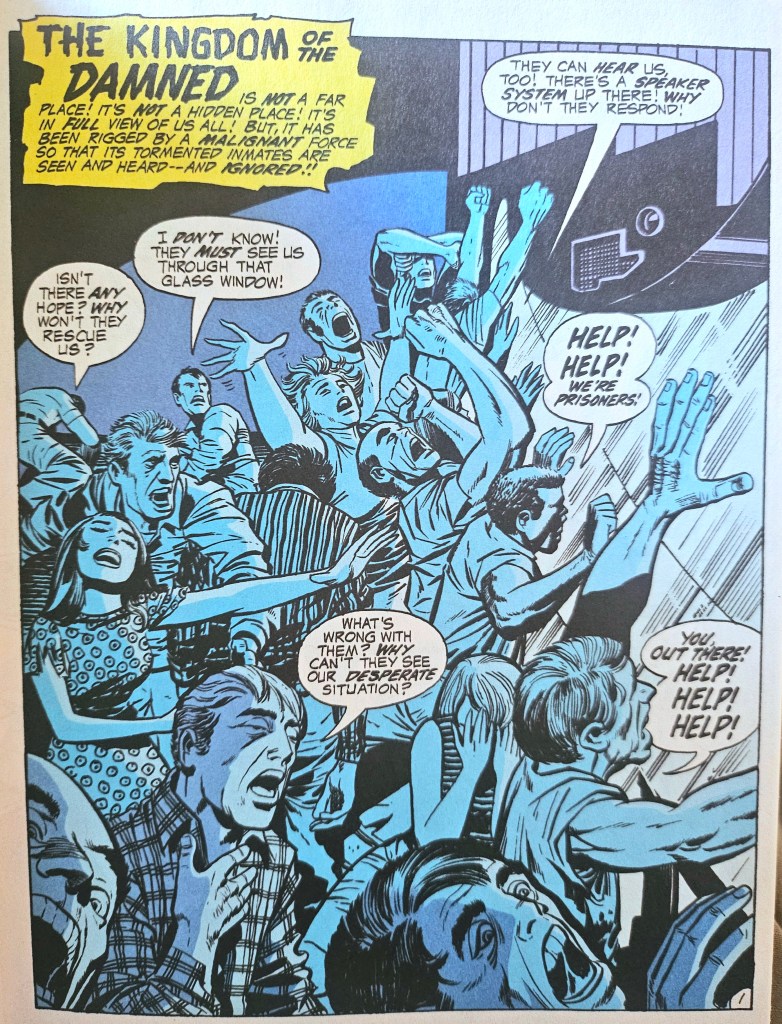
The above image isn’t the most shared scene from this particular Jack Kirby comic – that would be the one where a scared child prompts a classic Darkseid speech, “you elders hide me with “cock and bull” stories to keep the premises smelling sweet” – but it’s probably the most telling. Kirby was a pro, after all. He knew how to set the scene. So while the sight of Darkseid walking around openly in a theme park, confident that he’ll be taken for another entertainment, is an excellent depiction of the spectacle in action, it’s all there in the opening paragraph. “THE KINGDOM OF THE DAMNED is not a far place! It’s not a hidden place! It’s in full view of us all!”
All too obvious. Always too obvious.
There’s an exhaustion to that response, one that feels like an intended outcome. Bourdain again: “The air smells fresh and physically fit, statuesque blonds pedalled through streets, lined by old buildings and canals… apparently Denmark is, like, the happiest place on earth.” We had a great time there, just as we do at home, in our Gray days and Neuromantic nights. The trouble is, most of the time it’s harder to step off (the ride? set? mixed metaphors – close enough, allow it) and remember how to take action in the world. Kirby again: “It has been rigged by a malignant force so that so that its tormented inmates are seen and heard — and ignored!!”
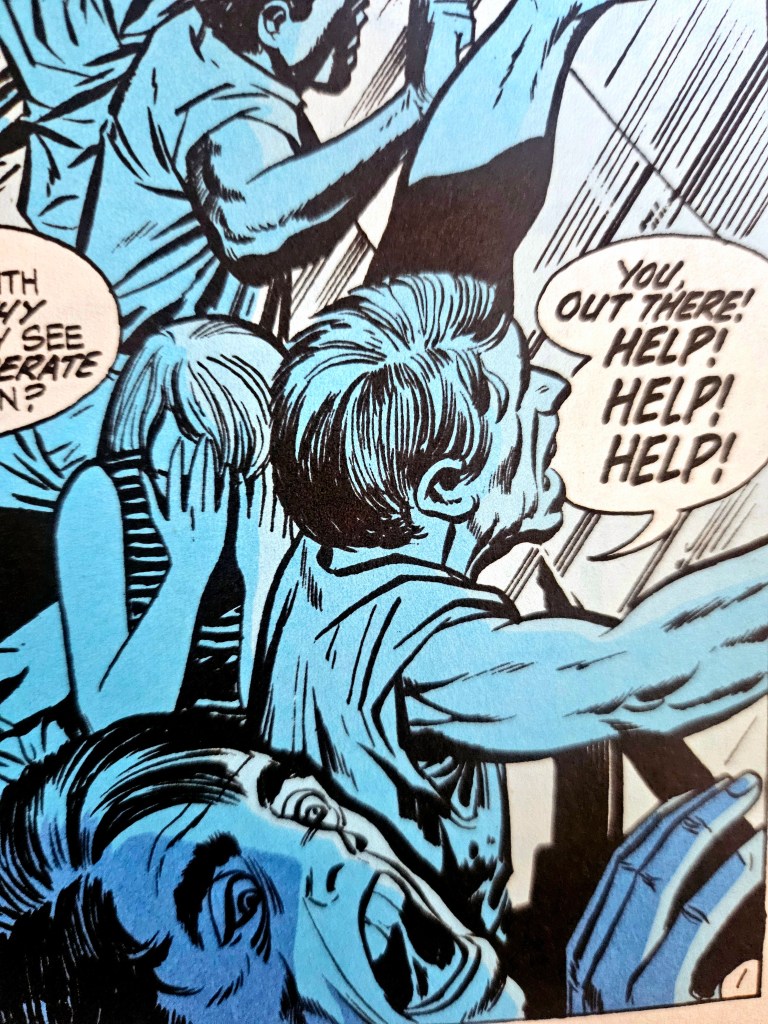
He was pretty fucking good, Jack Kirby. It’s easy to forget the actual work when you’re paying tribute to the reputation, but Forever People #4 is an unusually potent entertainment. That scene where you’ve got to keep pushing a button to stop someone being decapitated by a roller coaster – it’s a great, goofy comic book idea but I think of it every time I do activism by post. I spend a similar amount of time trying not to think about the way Kirby drew these frantic faces.
***
We’ve just passed the fourth anniversary of what I now just think of as “Kenmure Street.” On 13th May 2021, in Kenmure Street, hundreds of people stepped in to prevent two men from being detained by Immigration Enforcement officers.
No bad for an “island of strangers,” eh?
No bad for a world of people living in an entertainment either.
I’m conscious of the need to avoid turning this into a cosy fantasy, “People Make Glasgow” style – h/t Kieran Hurley, who’s right that we need to remember how much organising was required to enable the show of broader solidarity. We should be careful about our stories, especially when they feel useful. It’s good to know when to step away from the Gray/Neuromantic set, but if these miniature worlds have any use its in allowing us to contemplate their truths and implications, and to work out what parts of the fantasy we might be able to smuggle into the world. What does this vision offer? What does it obscure?
One more creator of unstable realities to play us out the gates:
“In my writing I got so interested in fakes that I finally came up with the concept of fake fakes. For example, in Disneyland there are fake birds worked by electric motors which emit caws and shrieks as you pass by them. Suppose some night all of us sneaked into the park with real birds and substituted them for the artificial ones. Imagine the horror the Disneyland officials would feel when they discovered the cruel hoax. Real birds! And perhaps someday even real hippos and lions. Consternation. The park being cunningly transmuted from the unreal to the real, by sinister forces. For instance, suppose the Matterhorn turned into a genuine snow-covered mountain? What if the entire place, by a miracle of God’s power and wisdom, was changed, in a moment, in the blink of an eye, into something incorruptible? They would have to close down.”
Philip K. Dick, How to Build a Universe That Doesn’t Fall Apart Two Days Later
 Blue Box // Recorder
