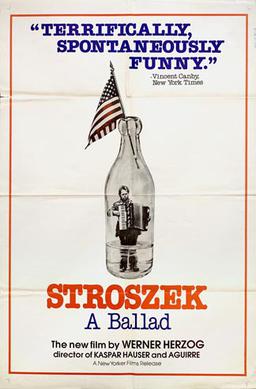
We’ve been on COVID shutdown since my partner tested positive on Saturday, which is my excuse for watching Werner Herzog’s Stroszek (1977) two nights in a row. The second time around I watched it with Tom Scharpling and AP Mike’s commentary…
…which is about as good a substitute for company as you could hope for. I could have done without Mike talking about Eva Mattes’ “rocking bod” but I enjoyed a lot of what they had to say, especially:
- The observation about the way Stroszek (Bruno S) doesn’t usually look at other actors when he’s off on a rant. This adds to the wary openness of his performance: without ever seeming to present a defence against the world, he always looks like he’s expecting it to attack him.
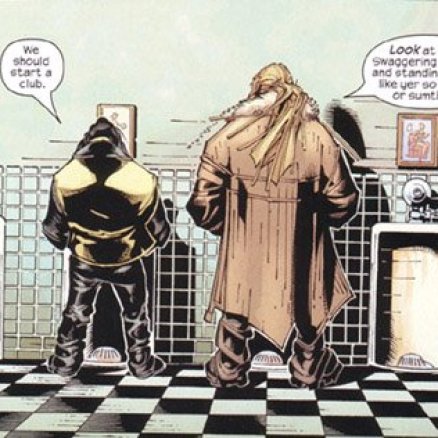
- Scharpling’s enthusiasm for the costuming of the pimps, and the description of the moustachiod hoodlum as a “shaved sasquatch”. We’re beyond caring about X-Men films, but I’d watch that guy play Sabertooth if anyone has a time machine and an urge to adapt Assault on Weapon Plus.
- Related, the pair’s enthusiasm for the strangeness of the scene where the pimp beats Stroszek and places bells on him as an act of humiliation. It’s inexplicable but effective, and whether it was planned or not it feels like it’s happening without warning.
- The comparison of Herzog’s facility for making use of non-actors and strange locations to the process of building a Best Show episode out of live calls.
- The unexpected mention of Martin Scorsese when Mike is talking about the use of ‘Old Lost John‘ in the finale. Musical collaboration is tightly wound into Herzog’s filmography, from the early contributions of Popol Vu to later soundtracks by Richard Thompson and Ernst Reijseger, but I wouldn’t think of him as a big needle drop guy. Still, it’s not a bad point when you think of how Herzog uses Sonny Terry here and in Bad Lieutenant, or the way ‘Zinskaro‘ plays out in Nosferatu. Is there a distinction to me made here between the best of Scorsese’s musical choices and their rote contemporary derivatives? If this is anything more than snobbery, thinking about Stroszek might help make sense of it.
- Mike saying “that’s a metaphor you know” when Stroszek does a lap on the ski lift at the end. Because hey, subtlety is overrated.
These back-to-back viewings brought a couple of elements of Herzog’s film into focus. Firstly, the way that Herzog’s seemingly improvisational style makes imagery that might look tired feel weathered instead. From Bruno’s busking to the dancing chickens at the end, Herzog’s love of cinema-as-circus means his big story of immigrant sadness feels rooted in Berlin, Wisconsin and North Carolina.
Secondly, the broken tenderness of Stroszek’s conversations with Eva. In these moments, Bruno S. performs with his whole face turned towards Eva, showing a willingness to be hurt that he otherwise refuses in the film. The tragic-comedy comes from the way his explanations of his own suffering can only hit her like yet another set of unwanted demands, like the man turning up to discuss them being behind on their payments for their mobile home. Thinking back to the early scene with the premature baby, you suspect that he just wants to be held tenderly, and that she wishes to be free from the need to hold on with all she’s got.
 Blue Box // Recorder