Browsing twitter the other day, I found myself getting annoyed at someone who asked for an explanation of a comic strip Eleanor Davis had shared. Drawn for the New York Times, the strip itself covers a journey to and from a protest for abortion rights that had been undertaken in the company of a small child.
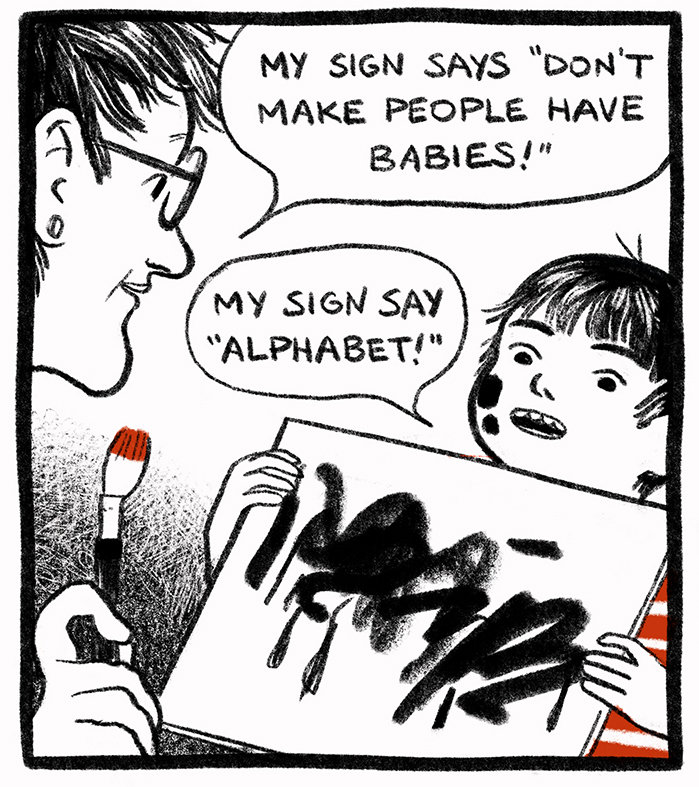
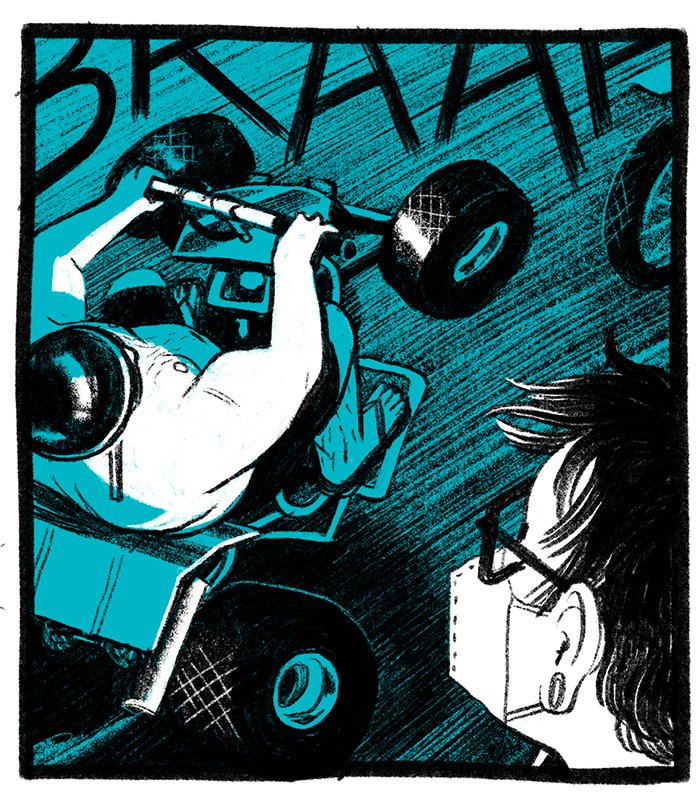
The comic is simple and intricate, with a focus on faces observing faces and a careful colour scheme that splits events into three parts – the build up and the protest in red, a bus ride past some bikers in blue, and a cycle home in autumnal orange. The offending confusion was apparently caused by the switch from red to blue, with the implicit question being “how do these two things connect?”
My annoyance at some random twitter comment is almost certainly pure vanity, “people don’t know how to read” as a displacement of “I have failed in my responsibility to teach people how to read”, as though anyone gives a fuck. This vanity is even more egregious in the context of a comic about a serious threat to the rights of women and others, a threat that is part of a coordinated and malicious attempt to control and ostracise the majority of the human race in order to shore up the interests of the few.

At the same time, such appreciations are at the heart of the strip itself, which is precisely narrated in order to outline not just the importance of being able to chose whether you have a child, but the value that the space to chose provides whatever you do with it. In the comic, this takes the form of a series of experiences shared with a child, but the transitions from section to section do a lot to make sure we keep other possibilities in our eye line. The scenes in blue where our home-bound protesters see the bikers riding beside their bus faces into two directions, with different stories, different freedoms and different possibilities running on both sides of the glass. We cannot know the life stories and domestic situations of these bikers from a few quick glances, though the “kill me” jackets and gleeful wheelie popping point to carefree youth. In context, it is enough that these bikers seem real and free, existing on the verge of cliche but drawn with a fleeting specificity that makes them feel like part of life. Their passing is one of many things tenderly observed by both the child and his parents, but it’s also part of a different story altogether, and the movement into private language on the bike ride home in the final section is all the more vivid for its dissonance with the briefly realised world of the dirt bikers. If the protestors in the crowd in the red section were also primed with possibility, this is partially masked by the fact that everyone in that section is working to show a unity of purpose.
The observances of parent and child here aren’t strictly speaking aeshetic, but they’re not not aethetic either. If we are going to take aesthetics seriously, that means keeping their importance in perspective, and when the aesthetics in question are so elegant and open in how they draw our eye to varying opportunities and perspectives, we owe it to ourselves to pay attention. When people are incapable or unwilling to see we might want to focus our rage on those broader structural forces that make those blinkers so ubiquitous, rather than getting ourselves into a strop about our own inability to get the world on the right page.
 Blue Box // Recorder